

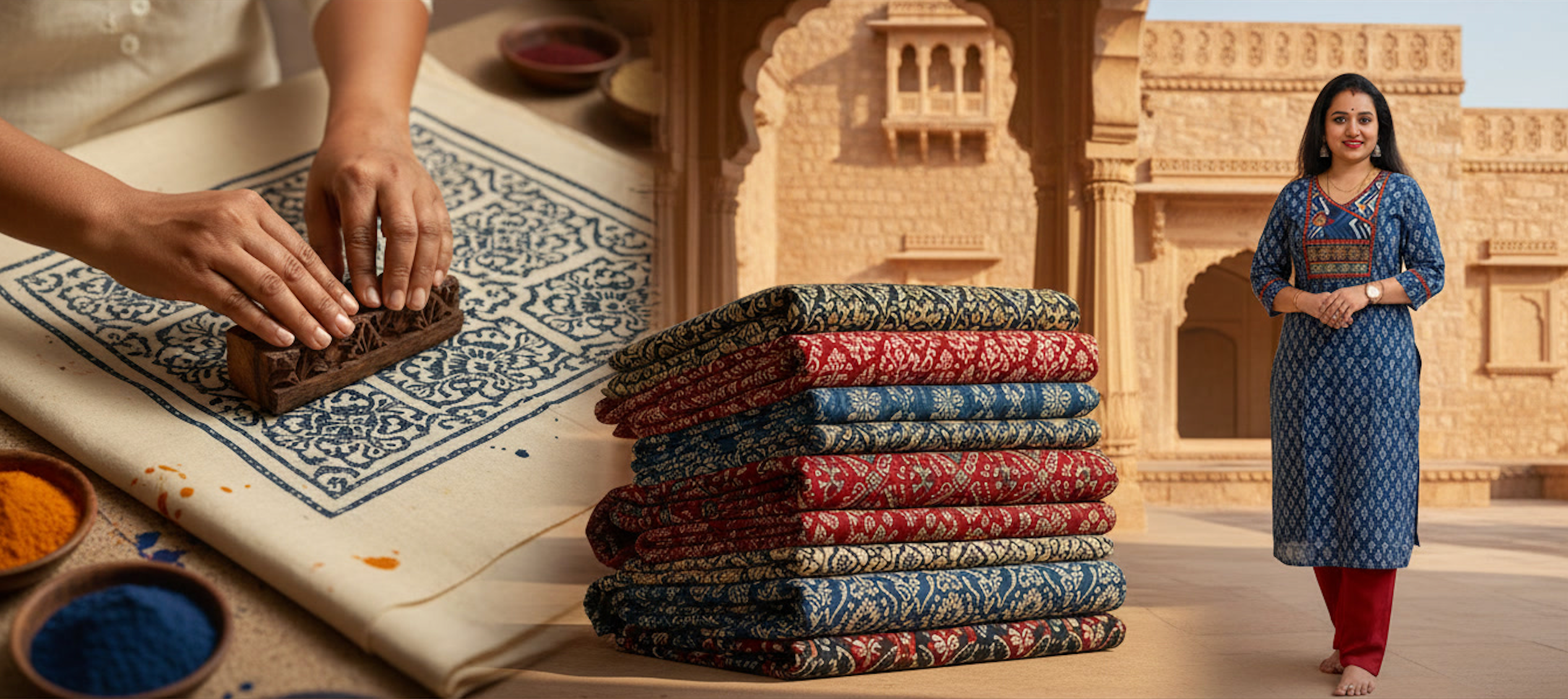
Ajrakh is more than a textile, it is a living craft defined by precision, patience, and cultural depth. Known for its striking symmetry and deep, saturated hues, Ajrakh holds a distinctive place in Indian handloom traditions. Today, its relevance extends far beyond heritage, finding renewed expression in modern wardrobes across India and beyond.
Traditionally, Ajrakh is printed on natural fabrics such as cotton, silk, modal, and cotton silk blends. Cotton remains the most preferred base, prized for its breathability and its ability to absorb dyes evenly, allowing intricate patterns to emerge with remarkable clarity. Silk and modal Ajrakh bring a softer drape and contemporary appeal, making the craft adaptable to modern silhouettes while preserving its artisanal essence.
The colour palette of Ajrakh is both iconic and intentional. Indigo blue and madder red form its foundation, complemented by black, white, and subtle touches of mustard or green. These hues are derived from natural dyes such as indigo leaves, madder root, iron, and alum. Unlike chemical dyes, natural Ajrakh colours deepen with time, giving the fabric a lived-in richness that enhances its appeal.
What truly sets Ajrakh apart is its complex resist-printing technique, involving up to 14–16 meticulous stages. The fabric is printed on both sides with near-perfect alignment, resulting in its signature reversible symmetry. This balance of geometry, natural dyeing, and hand block printing makes Ajrakh one of the most technically refined textile traditions in India.
Historically, Ajrakh traces its origins to the Indus Valley Civilisation, with strong roots in Kutch, Gujarat, and parts of Rajasthan. Traditionally worn by pastoral communities, Ajrakh was valued for its comfort in extreme climates and its durability. Its purpose was always functional as much as it was cultural.
In contemporary fashion, Ajrakh has found versatile expression through Ajrakh kurtis and Ajrakh salwar suits. Ajrakh kurtis are especially popular for everyday and workwear, offering breathable comfort, structured silhouettes, and a quiet elegance that suits modern lifestyles. Ajrakh salwar suits, on the other hand, elevate traditional dressing with their bold patterns, tailored cuts, and coordinated dupattas, making them suitable for festive occasions as well as refined daily wear.
The recent surge in Ajrakh’s popularity reflects a broader shift toward sustainable fashion, slow textiles, and authentic Indian handloom. Designers and conscious brands have reimagined Ajrakh in contemporary forms, while social media and storytelling have brought its craftsmanship into sharper focus. Consumers today seek meaning in what they wear and Ajrakh, with its depth, discipline, and history, delivers exactly that.
Far from being a passing trend, Ajrakh represents a return to thoughtful design, enduring quality, and cultural continuity making it as relevant today as it was centuries ago.
Share:
Where Every State Has a Name, but the Sun Is the Same
Big Heart Sale